
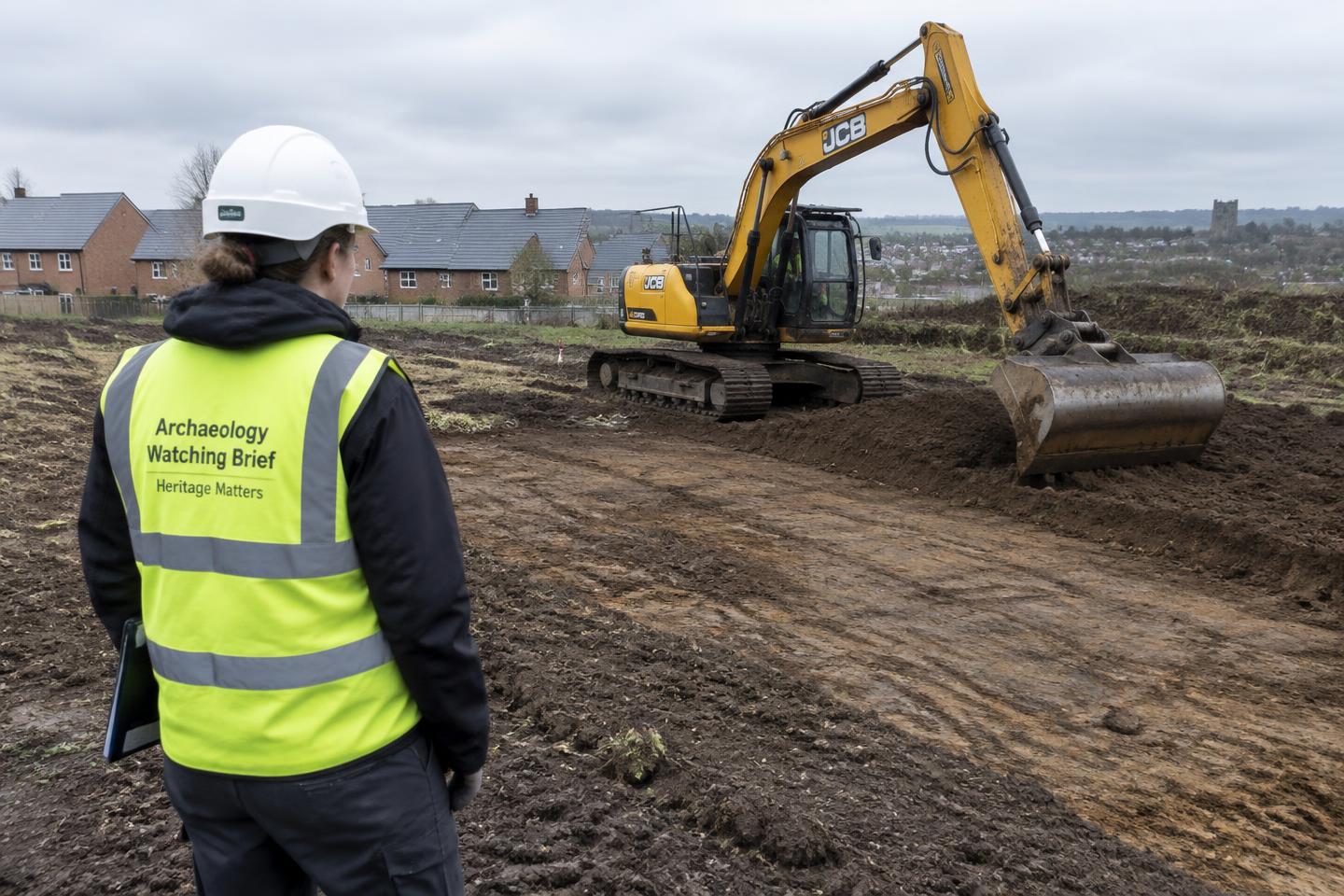
Why archaeology is part of planning
The National Planning Policy Framework requires planning authorities to consider the effect of development on heritage assets, including buried archaeology. Most authorities take advice from an archaeological advisor, often based at the county council.
The typical sequence
Work usually moves from desk-based assessment, to non-intrusive survey such as geophysics, to trial trench evaluation and, only where needed, mitigation such as excavation or a watching brief.
Pre-application or condition?
Some authorities want evaluation before they determine an application; others attach archaeological conditions to a consent. Early advice helps avoid surprises either way.
How MAP helps
We talk to the planning archaeologist, agree a proportionate approach, deliver the fieldwork and produce the reports needed to discharge conditions.
This guide is general information, not advice for a specific site. Talk to our team about your project.